
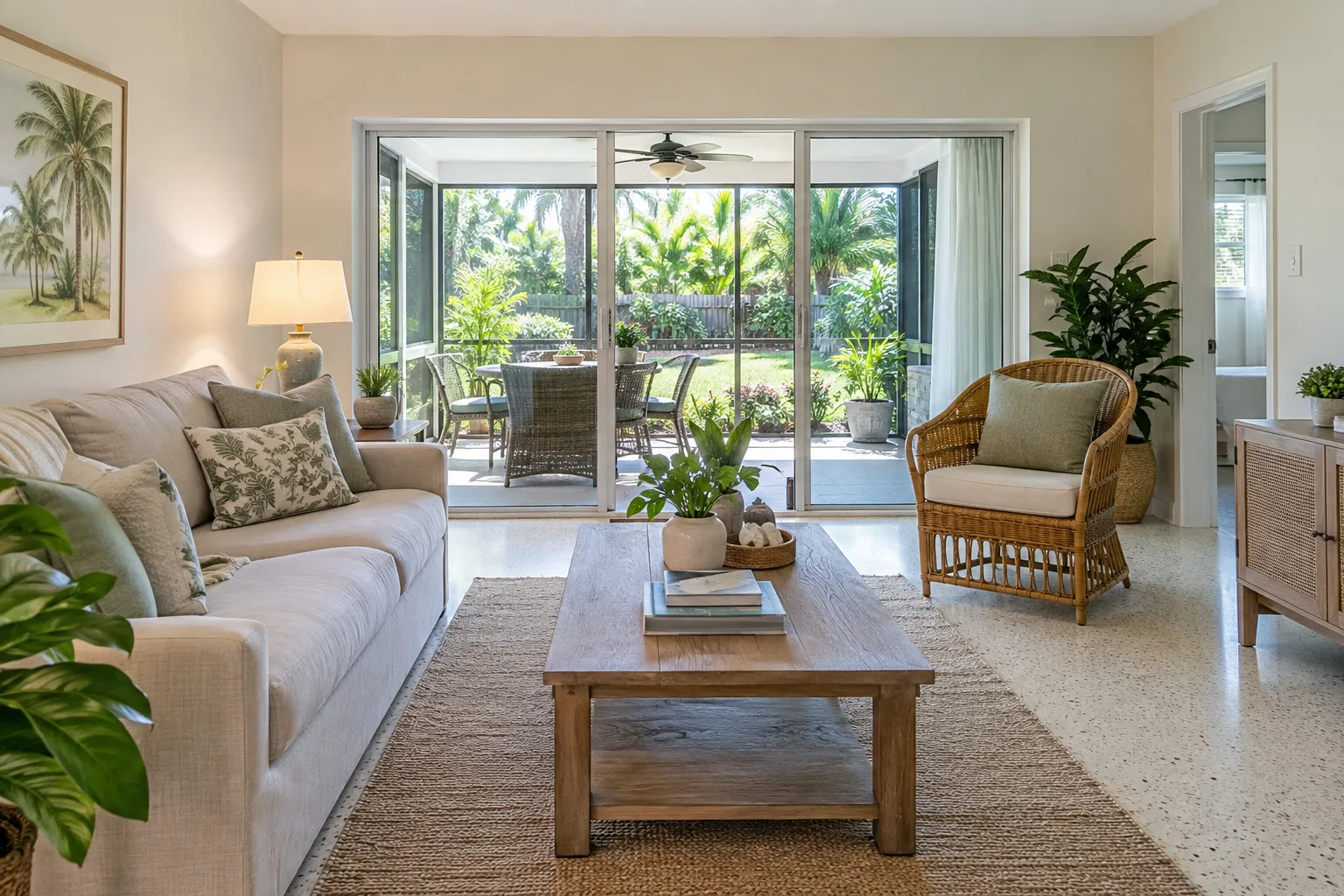
Begin with a plan, not a shopping list.
Before spending on paint, fixtures or staging, walk through the home with your agent. Talk about its condition, your timeline and the properties buyers may compare it with. Distinguish a necessary repair from a cosmetic preference.
A welcoming entry, a clean interior, less clutter and a cared-for exterior give you a useful starting point. Work through the home in a sensible sequence, focusing your effort where it matters instead of assuming every room needs an upgrade.
Set a budget and decide which tasks you can reasonably complete. Get professional advice for work that needs a licensed trade or permit. Do not hide a defect beneath a cosmetic improvement; discuss known issues and the appropriate disclosures.
01 / Make arrival feel easy.
Clear the path to the front door and make the entry easy to access. Tidy landscaping, remove loose debris and check the doorbell, exterior lights and visible screens. A clean doormat and a cared-for entrance are often more useful than elaborate seasonal decoration.
Look at the home from the street and from the route a visitor will walk. Notice overgrown plants, clutter and obvious damage. Address what you safely can and arrange appropriate repairs for the rest.
02 / Clean deeply. Give the rooms room.
Focus first on kitchens, bathrooms, flooring and places where odors linger. Clean the details buyers notice: counters, mirrors, windows and the edges around fixtures. If the work is more than your schedule allows, consider a professional cleaning service.
Pack items you do not need every day and reduce excess furniture where it blocks movement. Keep cupboards and closets usable rather than transferring all the clutter behind their doors. Leave enough personality for the home to feel welcoming, with enough open space for its layout to be clear.
- Clear counters and create comfortable walking routes.
- Store valuables, medications and sensitive personal documents securely.
- Pack rarely used belongings early to make showing-day resets easier.
03 / Put condition before decoration.
Make a list of sticking doors, loose hardware, dripping fixtures and other everyday issues you may have stopped noticing. Decide with your agent which repairs to prioritize, and use qualified professionals when the work calls for them.
If walls need attention, choose a consistent, quiet palette suited to the existing finishes. Test paint in the room’s actual light before committing. Replacing every cabinet or decorative fixture is not automatically the right investment; a well-maintained home does not need to look newly built.
04 / Let the light and layout work.
Clean windows and adjust coverings so buyers can see the room comfortably. Replace failed bulbs with appropriate ones, and aim for consistent lighting rather than an assortment of harsh colors. Keep glare, privacy and the time of day in mind.
Arrange furniture to clarify each space’s purpose. A dining table can look inviting without a formal place setting in every seat. A few considered details are enough; staging should not make counters, doorways or seating difficult to use.
05 / Finish the story outside.
Help buyers picture themselves enjoying the outdoor space, whether it is a small balcony, a shaded patio or a spacious yard. Arrange furniture to make its purpose clear, keep paths open and give the landscaping a tidy finish. Put away stored items and clean up after pets so the space feels cared for and ready to enjoy.
In a coastal property, do not overlook visible wear on exterior hardware and surfaces. If you notice deterioration that may need specialist attention, arrange an evaluation. Presentation and repair are different tasks; one should not stand in for the other.
06 / Keep the final reset simple.
Build a short routine you can repeat before photography or a showing. Put everyday items away, clear surfaces, check lighting and make sure the home is accessible under the agreed showing plan. Keep strong fragrances out of the routine rather than trying to mask an odor.
Arrange a safe, comfortable plan for pets away from the showing activity. Do not relocate animals to an unsuitable garage or outdoor storage area to make a room look tidy. Keep their needs—and the security of your home—part of the plan.
- Reset kitchens and bathrooms; empty visible bins as needed.
- Put laundry and loose belongings in their planned storage spaces.
- Confirm access arrangements and secure personal items.
- Do one final look through the entry, main rooms and outdoor spaces.
Be ready for the questions behind the showing.
Gather the records you have: repairs, warranties, permits and relevant association information. Note questions you cannot answer so the appropriate person can help. Clear information can be as valuable to a buyer’s decision as attractive photographs.
Discuss the launch plan with Heidi, including preparation priorities, photography and how showings will be handled. The next step is a property-specific conversation—not a promise that a generic checklist will produce a particular selling price.
A few useful answers
Before your next step.
Should I renovate before listing?
Not automatically. Discuss condition, cost, timing and likely buyer expectations with your agent before committing. There is no universal renovation-return guarantee.
Do I need to remove all personal belongings?
No. Reduce distractions, make storage and movement easy, and secure sensitive or valuable items. The home can still feel lived in and welcoming.
Should I repair every minor issue?
Prioritize with your agent and the appropriate professionals. Separate safety or condition concerns from cosmetic preferences, and discuss disclosures rather than hiding known problems.
General real estate guidance. Property-specific decisions may require advice from your agent, lender, insurer, attorney or qualified contractor. This is not a market report or a substitute for professional evaluation.